
Concrete Thickeners Rehabilitation
Our team is forging ahead with the large-scale rehabilitation of concentrate thickeners for a leading South African platinum-group metals producer.
Subject to high wear due to abrasive slurry, the concentrate thickeners have experienced significant deterioration over time.
Therefore, we have been mandated to not only restore the thickeners to their original state. Working closely with our client and its engineering team, we are also implementing cutting-edge protection technology that will prolong the lifecycle of this critical production infrastructure. This will save our client in maintenance, repair and replacement costs further down the line.
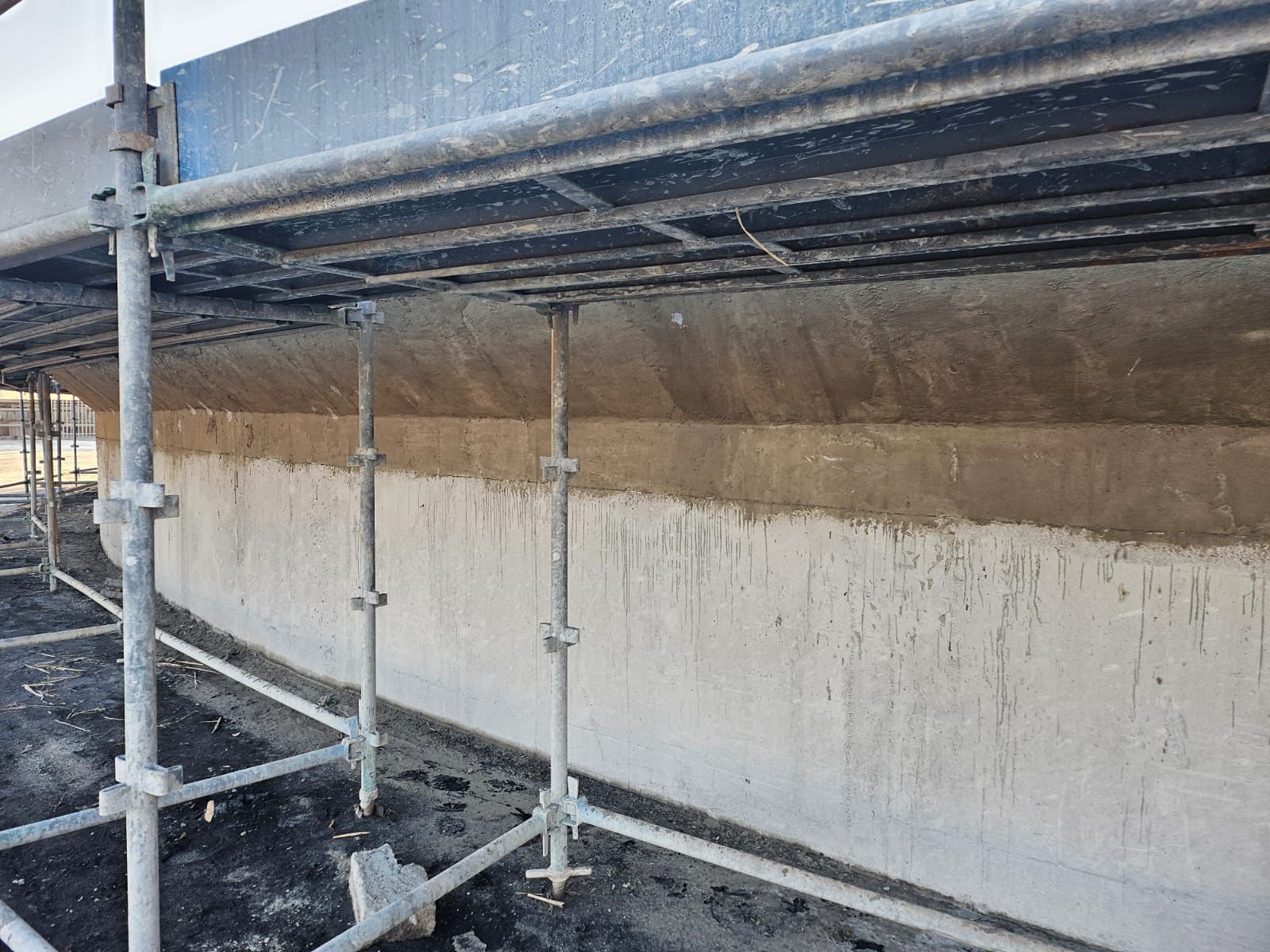
Currently working on Thickener 7, our team has sand blasted the outer shell and launder. Together, they total a 700m2 surface area that needed to be thoroughly prepared. Sandblasting also enables us to further identify areas that require rehabilitation.
We will then fill pores and level the surface with a three-part, epoxy-modified, cementitious, fine-textured mortar. This product is ideally suited to this application because it provides improved resistance to chemical and good protection of concrete in aggressive environments.
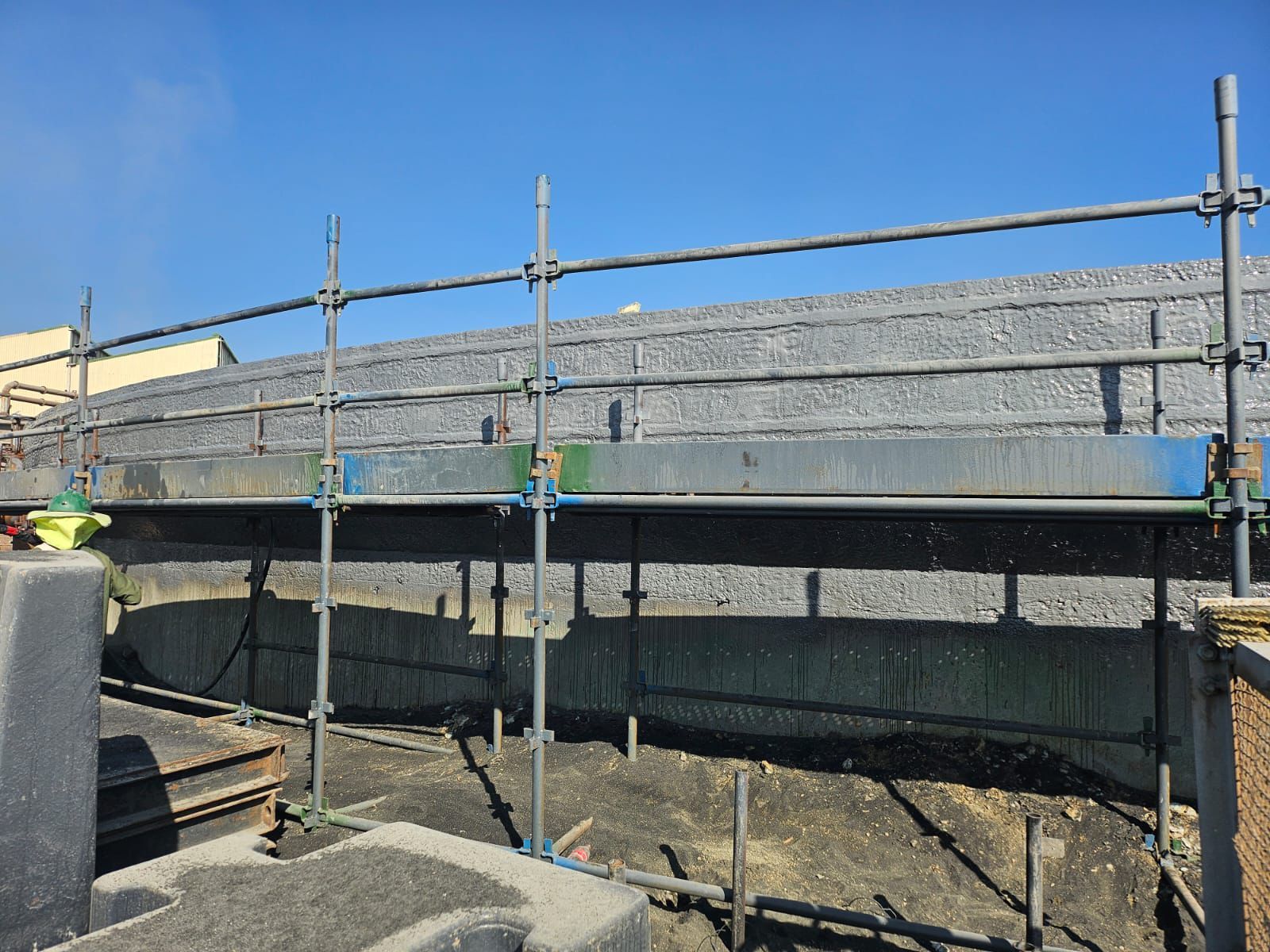
The surface will then be primed with a two-part epoxy primer, levelling mortar, intermediate layer and mortar screed. Thereafter a polyurea, hot spray applied, elastic waterproofing and protection membrane will be applied.
At the same time, we are repairing cracks inside the structure with a two-part, low-viscosity injection-liquid high-strength epoxy resin. It forms an effective barrier against water infiltration and corrosion-promoting media and structurally bonds the concrete sections together.
General concrete repairs are also being undertaken inside the tank with a free-flowing, high-strength, cementitious micro-concrete with a maximum 9mm aggregate size.
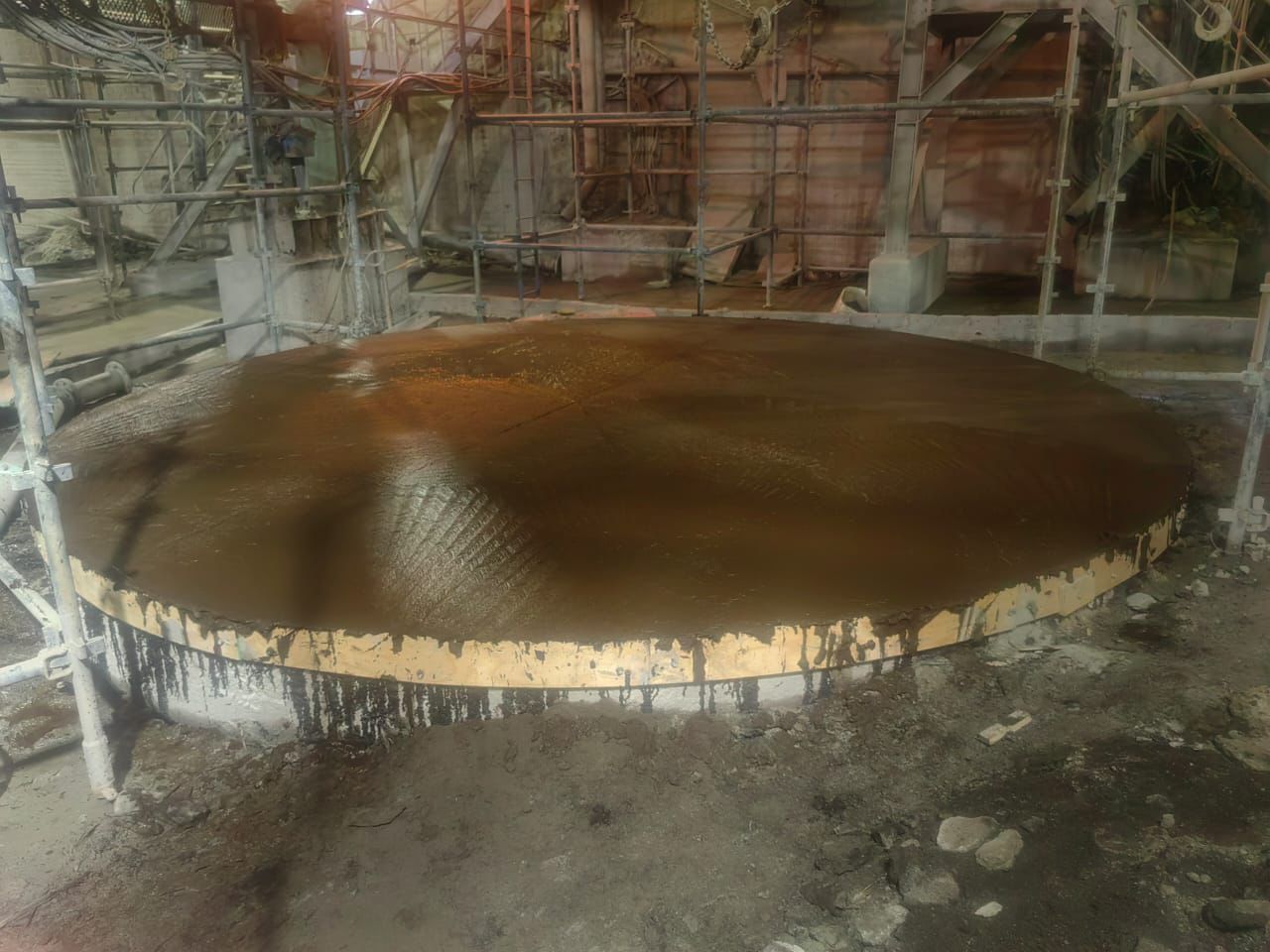
The tank base was also repaired after the old blinding was removed. A thixotropic water dispersed bitumen emulsion was then applied as a new tank blinding.
Thereafter, the floor of the concentrator and the lower sections of the walls will be primed with a two-part, low-viscosity epoxy resin, before receiving a coating to protect against chemical attack.
To complete the process, the structure will be reinforced with carbon-fibre reinforced-polymer strips. They have been tested for durability under many demanding conditions to ensure long-term performance in various applications and environments.
Projects
- Bunding area concrete repair
- Concentrate thickeners rehabilitation
- Concrete bund areas built
- Concrete bund wall built
- Concrete bunded reagent plant repair
- Concrete cooling tower repairs
- Concrete pump foundations rebuilt
- Concrete inline feeder chutes repair
- Concrete refrigeration cooling tower repair
- Concrete repairs for mining equipment
- Concrete repairs in-and-around Chutes
- Concrete repairs to silo
- Concrete Silo Rehabilitation
- Concrete silos repair
- Concrete skip bay repair
- Concrete silt trap built
- Concrete strengthening for building retrofit
- Concrete tank base repair
- Concrete tank repair
- Concrete Thickeners Rehabilitation
- Concrete thickener repairs
- Flotation plant concrete repairs
- Furnace cooling tower repairs
- Mill plant gearbox installation
- Quality concrete core samples for testing
- Steel-leach tanks repair
- Steel tank wear/waterproof lining
- Tanks corrosion protection and lining
- University concrete strengthening
- Water treatment plant concrete repairs