
By Marchant Sevenster
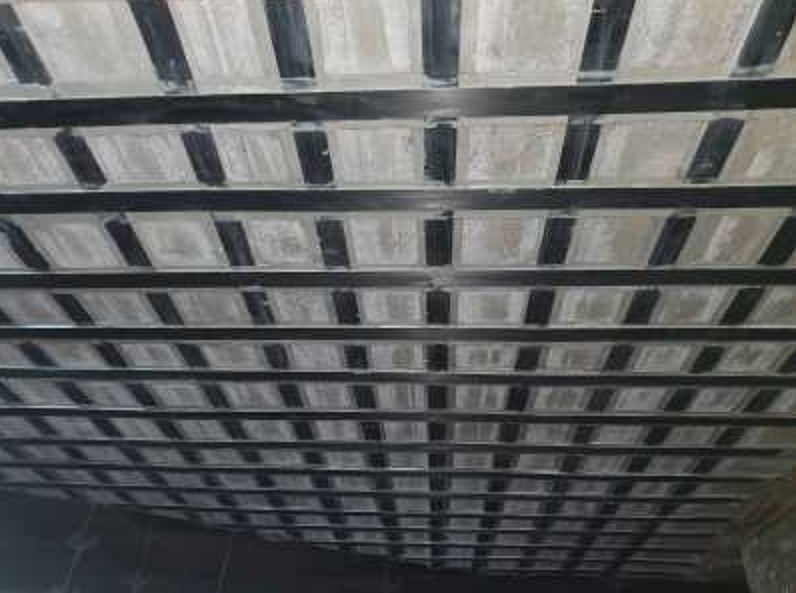
Carbon-fibre reinforcement is a major breakthrough in the concrete repair industry. As a leading concrete repair specialist, Hindle Mason Projects is at the cutting-edge of this technology and its application. We successfully deploy this technique to reinforce structures in a practical and cost-effective way. Importantly, the use of carbon-fibre as a reinforcement also does not change the interior or exterior aesthetics of concrete.
Concrete repair professionals are not only interested in finding effective ways of repairing concrete. A successful repair is more than just restoration. Importantly, it must prolong the lifecycle of concrete structures. This is the ultimate measure of the success of concrete repairs. However, the solutions and methods that concrete repair practitioners deploy must also be feasible and as non-intrusive as possible. Bear in mind that, in most instances, we work in operational areas. This is because business must continue. Operations cannot stop simply because maintenance or repairs must be undertaken. This would be counter intuitive. Good preventative maintenance of concrete structures ensures that operations continue without the risk of a major failure. As such, it is critical that our methods also minimise maintenance and repair time and are safe to deploy while working in these areas. They also need to be feasible – even more so in tough economic climates. This is when budgets for maintenance and repairs have been trimmed. Although a shortsighted approach, it is a reality. Budgets are tight. Carbon-fibre reinforcement “ticks all of these boxes”.
Novel concrete repair material
Research into this novel concrete repair material started in earnest in the 1970s. It was shown that carbon-fibre reinforced concrete had some suitable properties. Most of this research was directed at material made from PAN fibre [Polyacrylonitrile Fiber – an overview | ScienceDirect Topics]. Noted benefits included improved impact and tensile strength, as well as concrete elastic modulus.
In the 1980s, studies were conducted into pitch carbon fibre [Pitch-Based Carbon Fiber – an overview | ScienceDirect Topics]. Striking improvements were again recorded using just 0,2% carbon-fibre by volume.
Subsequent studies confirmed that even a miniscule fraction of carbon fibre significantly improves concrete mechanical properties. Furthermore, it outperformed steel or glass fibre in terms of durability.
Innovative concrete repair technique
This innovative concrete repair technique has fast replaced traditional retrofitting. Time and again, we have demonstrated the efficacy of carbon-fibre reinforcement. It provides unmatched strength-to-weight ratio and adhesion levels, as well as corrosion resistance. Over-and-above, it is easy to handle and install, cutting repair costs and time. This is when compared to traditional repair techniques. These include column ties; or supplemental vertical bars or reinforcing steel. Moreover, carbon-fibre reinforcement offers excellent shear reinforcement; increased compressive load capacity; and energy redistribution when compared to unconfined reinforced-concrete elements.
Carbon-fibre composites are stronger, lighter and provide better fatigue resistance than any other typical construction material. They are also temperature and corrosion resistant. All of these benefits combined make it an ideal solution for also repairing and preventing cracks. Hindle Mason Projects also uses the technology to straighten beams and upgrade bridge columns. Moreover, we have successfully deployed this technique in a myriad of other applications. These include to reinforce walls and piers; enhance seismic resistance; and strengthen existing structures after structural modifications. Certainly, our state-of-the-art method has also been successfully deployed to increase load capacity and enhance compressive strength.
Leading concrete repair materials
Hindle Mason Projects is an approved applicator of all leading concrete repair materials. This includes carbon-fibre reinforcement [Structural Strengthening (sika.com)].
By partnering this company, we can offer a comprehensive carbon-fibre reinforcement solution.
We have access to the best Carbon Fiber Reinforced Polymer (CFRP) Plates (sika.com). These are used to strengthen concrete substrates by externally bonding carbon-fibre reinforced polymer plates. Alternatively, they can be mounted on the surface.
These carbon-reinforced polymer plates come in different dimensions and varying E-moduli [Elastic Moduli – an overview | ScienceDirect Topics].
Using L-shaped carbon-fibre reinforced polymer plates, we can increase the shear capacity of concrete beams. We also use them to effectively anchor stirrup forces in concrete compressive zones.
We have also deployed carbon-fibre reinforced polymer plates for post-tensioning systems. This is an effective way of controlling structural cracks and deflections. In addition, this method is used to increase fatigue and seismic resistance.
Moreover, we have access to Fiber Reinforced Polymer (FRP) Fabrics (sika.com). We use these externally applied fabrics to increase flexural, shear, axial or to improve seismic resistance.
Fiber-Reinforced Cementitious Matrix (FRCM) (sika.com) completes our reinforced carbon-fibre reinforced offering. This includes a patented carbon-fibre grid embedded in a specially designed repair mortar. We use this system to reinforce concrete masonry structures. Our materials partner also offers an alkali-resistant solution for the same application.
Concrete repairs undertaken correctly
Trained in the application of these systems, Hindle Mason Projects ensures that concrete repairs are undertaken correctly. As an approved applicator, we can also guarantee our workmanship for the maximum available term.
So how do we go about reinforcing concrete with carbon fibre? Let’s use a concrete column as an example. This is considering that column restoration is an ideal application for fibre-reinforced composites. Lightweight and extremely strong, the material reduces the overall thickness of the repair. Weight is also minimised. The system also conforms perfectly to any size and shape. This while also preventing further corrosion to the reinforcing bar and cover any exposed metal.
The first step is to prepare the surface. This is a critical stage in any repair process. Refer to https://hindlemason.co.za/preparation-for-successful-concrete-repairs/ for more information on this vital step. A clean substrate will ensure a proper bond for the composite repair.
We then replace any missing concrete prior to the installation of the carbon-fibre reinforcing. This is usually done with a polymer cement. Thereafter, the concrete is treated with a penetrating primer immediately prior to installation for improved material properties. It increases the adhesion properties of the carbon-fibre composite while also strengthening the concrete itself.
Our teams then saturate the carbon-fibre fabric and wrap it around the columns in discreet bands. Importantly, each band has fixed overlaps. These are staggered with each subsequent band to improve bond strength. Once all the layers have been applied, they are left to cure before a UV-stapled topcoat is applied.
If undertaken correctly by a trained team, such as application should last for 50 years without requiring additional repairs.
Benefits of concrete repair
However, we have only started scratching the surface as to the benefits of this concrete repair material. The future points to wider use of carbon-fibre concrete to build more durable structures. Due to the properties of carbon fibres, buildings could be built narrower and still be more stable. This would provide a saving of about 50% of concrete, a major step in the right direction in terms of sustainability. Take parking garages in modern buildings, for example. At present, the reinforced concrete has to be refurbished and re-coated constantly. This would no longer be the case with reinforcement made of carbon fibres. Parking garages could last up to 200 years if maintained appropriately by a competent concrete repair professional.
Then there is the potential to redevelop buildings with this concrete. Thin layers of carbon concrete of about 1cm in thickness can be applied to the existing structure. The slab surface is roughened slightly before the special concrete is applied to a depth of up to 4mm. Thereafter, carbon mesh is installed, and another layer of fine concrete then placed so that the reinforcement does not exceed 1cm. This additional layer provides up to 300% load-bearing capacity!
Learn more about Hindle Mason Projects, industry’s foremost provider of cutting-edge concrete repair solutions. www.hindlemason.co.za
Marchant Sevenster is Business Development Manager of Hindle Mason Projects