
By Ben du Preez
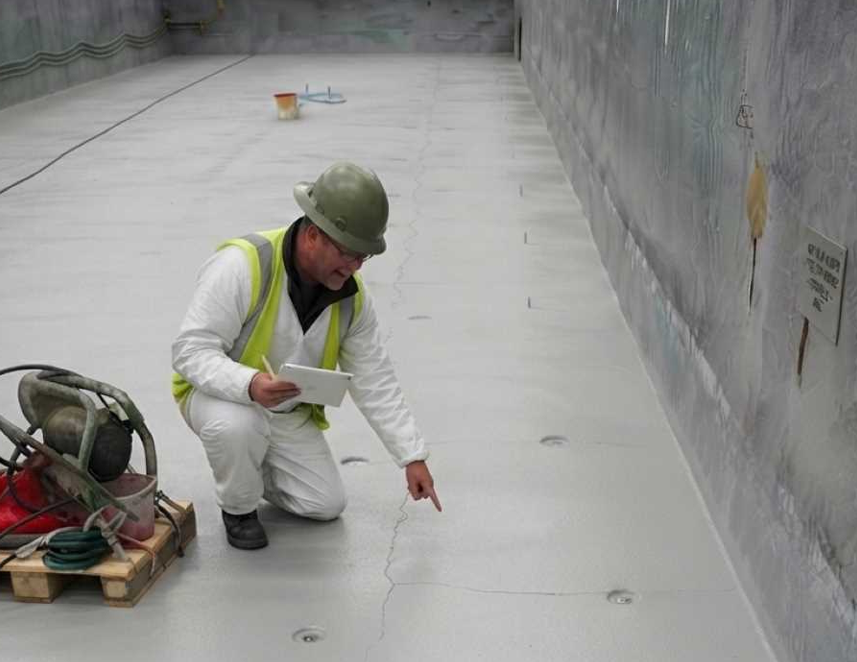
HMP’s specialist injection waterproofing provides a targeted solution to persistent leakage in underground structures.
Continued water ingress can accelerate steel corrosion, as well as damage concrete and finishes. Ultimately, it compromises functionality and ultimately shortens the service life of valuable infrastructure. Forensic engineering of water leakages of underground structures – ScienceDirect.
HMP tailors its injection waterproofing solutions to the source and nature of the water ingress. Specialised systems seal cracks, joints, voids, hoses and compartment systems in concrete structures.
Depending on the application, HMP’s injection materials can permanently seal leaks, accommodate movement and restore watertightness. Certain systems can also contribute to restoring structural integrity and load-bearing capacity.
HMP’s injection systems are tested to relevant international standards and integrate with its comprehensive engineered waterproofing range. This enables HMP to provide specialist, engineered solutions for challenging leakage and waterproofing requirements.
Injection waterproofing success
Effective injection waterproofing depends on three critical factors: the correct material, equipment and application method.
1. Injection Material
Selecting the correct injection material for the project is fundamental. Its viscosity, flexibility and behaviour when exposed to water can significantly influence penetration, adhesion and long-term sealing performance.
2. Injection Equipment
The selected material must be matched with suitable equipment for preparation, mixing and application. Accurate dosing and mixing, the correct injection pump and appropriate packers, ports and connectors all contribute to effective material delivery.
3. Injection Method
Even the correct material and equipment will not deliver the required result without the correct application technique. Injection must be undertaken by trained, competent and experienced specialists. HMP understands the behaviour of the material, the structure and the source of the water ingress.
The result is a controlled injection process designed to deliver reliable, durable and permanent leak-sealing performance.
Injection waterproofing materials

Different leakage and repair conditions require different injection waterproofing materials. Selecting the appropriate resin is critical to achieving the required sealing, waterproofing or structural repair performance.
Polyurethane Foam Resins
Polyurethane foam resins react rapidly with water and expand to temporarily block the passage of water through cracks and voids. Their reaction produces a tough, flexible and elastic foam. Where permanent waterproofing is required, the foam is typically followed by injection of a suitable non-foaming polyurethane resin. Refer to Polyurethane Foam – an overview | ScienceDirect Topics.
Polyurethane Resins Hydrophobic and flexible, polyurethane resins are used for non-structural sealing and waterproofing of cracks, joints and voids. Their low viscosity enables effective penetration into concrete, while strong adhesion and resistance to water provide a durable, elastic seal. Where water ingress is significant, polyurethane foam may first be used to temporarily stop the flow. Non-foaming resin can then be injected. Refer to Polyurethane Resin – an overview | ScienceDirect Topics.
Acrylate Resins
Acrylate resins are hydrophilic, highly flexible materials used for non-structural injection of cracks, joints and voids. They are particularly suited to injection hose and compartment systems, as well as grid and curtain injection. Their extremely low viscosity, similar to water, provides excellent penetration. Reaction time can also be adjusted to suit site conditions, including temperature and injection distances. In contact with water, they swell to seal and waterproof the affected area. Refer to Acrylic Resin – an overview | ScienceDirect Topics.
Epoxy Resins for injection waterproofing
Epoxy resins for injection waterproofing provide high tensile and compressive strength and are generally considered rigid materials. They are widely used for structural injection repairs to cracks and voids in load-bearing reinforced concrete. Their low viscosity allows excellent crack penetration, while their strong adhesion to concrete enables durable load transfer. Epoxy injection is suited to a range of structural repair applications in dry and slightly damp conditions. Refer to Epoxy Resin – an overview | ScienceDirect Topics.
Microfine cement suspensions
Microfine cement suspensions (microfine cement grouts) are rigid, polymer-modified injection materials formulated from specially blended microfine cements. Refer to Development and application of novel microfine cement-based grout – ScienceDirect.
They do not accommodate movement. They are thus suited to static cracks, voids and construction or daywork joints where movement is not expected.
Their fine particle size, combined with polymer modification, provides high flow characteristics and excellent penetration into fine cracks and voids. They are, thus, suitable for structural injection applications where effective penetration and durable filling of non-moving defects are required.
Injection waterproofing requirements
Different defects and leakage conditions require different injection waterproofing requirements. These include crack or joint nature, presence of water, hydrostatic pressure and whether movement needs to be accommodated.
Cracks and penetrations (exceeding 0,2mm in width, under hydrostatic pressure and where no hydrostatic pressure is present) can be waterproofed. Injection solutions can be selected for dry, damp or wet conditions. Where structural performance is required, injection can also restore force transfer across dry cracks. This includes cracks wider than 0.3 mm and finer cracks wider than 0.1 mm.
Leaking expansion joints require solutions that can restore watertightness while accommodating movement.
Construction and daywork joints, which are generally non-moving, can be waterproofed with or without hydrostatic pressure. Injection can also restore waterproofing where an existing joint sealing or waterproofing system has been damaged or incorrectly installed.
Leaking membrane compartment systems can be repaired through injection to restore the waterproofing performance of damaged or leaking sheet-membrane systems.
Leaking wall and kicker areas can require specialised injection techniques depending on the extent and location of the defects.
Grid injection is used for larger areas of localised deterioration. This includes honeycombing, voids or areas affected by poor concrete compaction. Injection points are arranged in a grid pattern to enable the material to penetrate and seal the affected area.
Curtain injection is used where water is entering through multiple minor defects or leakage paths. The injection is carried out behind the structure or element to form a sealed barrier, making it particularly suitable for leakage associated with multiple tie-bar holes and other dispersed defects.
Injection waterproofing pump technologies
Two main injection waterproofing pump technologies are deployed.
Single-component pumps are the most widely used. Their principal advantage is lower capital cost, making them a more accessible option. The injection material is mixed before being introduced into the pump and delivered through the injection system.
Two-component pumps are used where the properties of the injection material demand a different approach. They are particularly suited to fast- and very fast-curing resins with extremely short working times. The components are kept separate until they are mixed during injection. This allows rapid-curing materials to be applied before they begin to set.
Two-component pumps are also advantageous for high-volume injection applications. This is where their ability to continuously mix and deliver material can improve productivity and process control.
Injection waterproofing process

HMP approaches injection waterproofing as a controlled, sequential process designed to achieve thorough and durable sealing.
The process begins with accurately drilling holes for mechanical packers at alternating positions along the crack. This is typically at 45° to the concrete surface. The packer holes are sized to suit the selected packers and injection requirements.
HMP then installs and securely tightens the mechanical packers to withstand the required injection pressure. A non-return valve is fitted to the first packer and injection begins.
As the injection material emerges from the next packer, the injection point is transferred. This, while working systematically from packer to packer along the length of the crack. Such an approach helps ensure that the injection material penetrates and fills the crack.
Where required, HMP carries out a secondary injection. This is particularly important when polyurethane foaming resin has been used to initially control water ingress. A suitable non-foaming polyurethane resin can then be injected to thoroughly fill the crack and provide a durable, long-term seal.
Injection waterproofing at construction joints

HMP uses injection waterproofing hose systems to provide reliable waterproofing at construction joints. The system can be installed as the primary joint-sealing solution or as a secondary line of defence alongside conventional waterbars.
During installation, HMP identifies and exposes the ends of the injection hose at accessible junction boxes. The injection equipment is then securely connected. An appropriate injection material is then pumped through the hose until it emerges from the opposite end.
The opposite end is closed. Injection then continues until the material penetrates along the length of the construction joint, sealing potential leakage paths. Where a re-injectable material is used, HMP can subsequently flush the hose with water and remove the water under vacuum. This leaves the hose ready for future re-injection if required, providing a maintainable waterproofing solution over the life of the structure.
Curtain injection waterproofing process

HMP deploys the curtain injection waterproofing process in basements.
Basements can develop widespread water ingress for a variety of reasons. These include inadequate concrete mix design, poor placement or compaction, ground movement and rising water tables. Where leakage occurs across large areas, curtain injection can be used to seal the structure from behind. By injecting suitable materials into the surrounding ground or voids behind the concrete, the system creates a barrier. This helps prevent further water ingress across extensive areas.
HMP first drills a series of injection holes through the leaking concrete component, typically at 300–500 mm centres, to establish a controlled injection grid. Mechanical packers are then installed and securely tightened to withstand the required injection pressures.
Injection begins at the lowest row of packers. A non-return valve is fitted to the first packer, and the injection material is pumped into the structure. As the material travels behind the concrete, it emerges through the adjacent packer. The non-return valve is then fitted to that packer, injection at the first packer is stopped. The process then continues from the second.
HMP systematically progresses from packer to packer. This, while controlling the injection process to ensure the material reaches the required areas behind the structure. This sequential approach allows widespread leakage to be addressed.
Injection waterproofing: compartmentalised membrane systems

HMP also specialises in injection waterproofing of compartmentalised membrane systems for below-ground structures. These systems divide the membrane into individual compartments, allowing leakage or damage to be precisely located and addressed. Should a compartment develop a leak, HMP can inject suitable sealing materials through accessible flanges from inside the structure. This enables affected compartments to be sealed without excavation or external access, a practical and maintainable approach over the long-term.
HMP accesses the Control Tube vent ends for the affected compartment through the junction box. We then connect the injection equipment to the first vent. Once a secure connection is established, HMP begins pumping the injection resin under controlled pressure.
The remaining vent ends are monitored throughout the process. When resin emerges from an adjacent vent, injection is stopped and the vent sealed. The process is then continued through the newly filled connection. This process is repeated systematically across the compartment, progressively displacing water and replacing it with injection resin.
Once all vent ends have been filled with uncured resin under pressure, HMP stops the injection process. The Control Tubes are then cleaned before the resin cures, ensuring that the system remains accessible for future inspection and re-injection if required.
By combining appropriate materials, specialised equipment and controlled application techniques, HMP tackles the cause of leakage.
Du Preez is a Contracts Manager of HMP