
By Gert Schmidt
Our concrete corrosion protection specialists are on standby to help you to extend the useable life of your critical assets.
These skilled and experienced professionals are at the cutting-edge of corrosion protection. They are also supported by our robust supply chain that consists of leading manufacturers and suppliers of corrosion protection materials. For more than 30 years, we have kept pace with the evolution of corrosion-protection materials and technologies. This is by nurturing robust professional relationships with manufacturers of cutting-edge technologies that safeguard concrete against deleterious agents.
Through our expertise in materials selection, as well as corrosion prevention and control strategies, we reduce long-term operating costs.
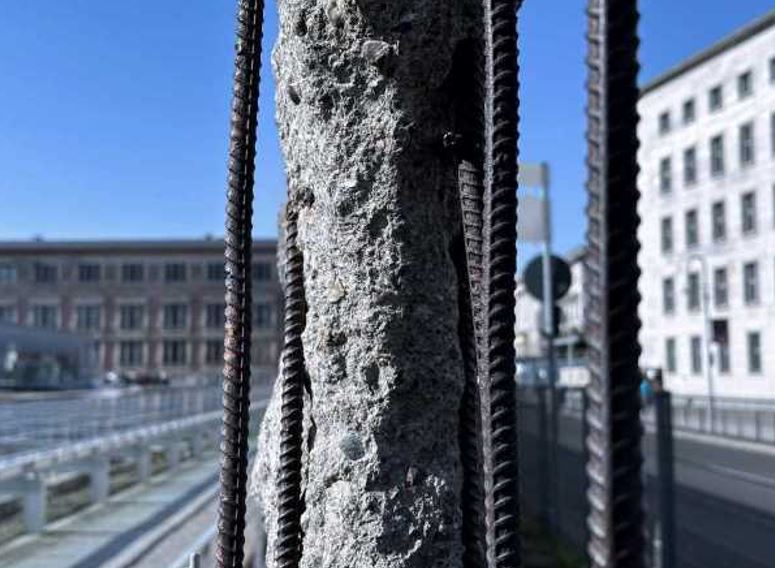
Steel reinforcing corrosion is the primary cause of structural deterioration. Reinforcement takes over tensile loads in concrete. A protective layer is formed around the reinforcement due to the high alkalinity of concrete. However, when carbon dioxides or chlorides reach the rebar, this layer is chemically destroyed. Wet and dry cycles then accelerate the corrosion process.
The global cost of corrosion is estimated to be US$2,5trillion, which is equivalent to 3,4% of global gross-domestic product. By implementing available corrosion control practices, savings of between 15% and 35% of this cost can be achieved. This is between US$375 and US$875billion annually on a global basis [http://impact.nace.org/economic-impact.aspx].
Notably, these costs do not include individual safety or environmental consequences of corrosion. Near misses, incidents and outages have raised the awareness of the risks posed by corrosion.
Corrosion protection specialists assess structures
Our competent concrete corrosion protection specialists assess structures to identify susceptibility to corrosion. They do this while considering factors such as environmental conditions; material composition; and design features.
The many sophisticated methods that we use to assess the condition of structures include:
- Core-drilling samples for laboratory testing
- Compressive-strength testing
- Soil sampling
- Carbonation/chloride testing
- Environmental studies
- Reinforcing bar scanning
- Pull-off testing
- Dry-film thickness testing
These techniques provide us with a sound understanding of the condition of the structure and the causes of deterioration. We can then select the most appropriate materials and procedures to ensure a long-term solution.
To ensure long-lasting durability, an appropriate maintenance strategy must be followed by owners and operators of structural assets.
Corrosion protection specialists’ vast solutions
Corrosion protection specialists have vast knowledge of the various types of methods used to safeguard structures against corrosion. These include active and passive corrosion inhibitors; protective coatings; and cathodic protection.
Corrosion inhibitors [Total Corrosion Management Overview (sika.com)] can be a cost-effective solution for reinforcement corrosion. Determining whether to select an active or passive type depends on exposures, environment, quality of concrete and concrete cover. Neither system changes the appearance of concrete.
Hindle Mason Projects uses passive corrosion inhibitors [Sika Technology and Concepts for Hydrophobic Impregnations] extensively. These easy and fast to apply hydrophobic impregnations reduce water uptake and prevent ingress of water-dissolved contaminants, such as chlorides. They penetrate surface pores and capillaries, lining but not filling them. By changing the surface tension of mineral substrates, water and aggressive water-soluble salts, including chlorides and sulphates, are kept out.
Corrosion protection specialists’ protective coatings
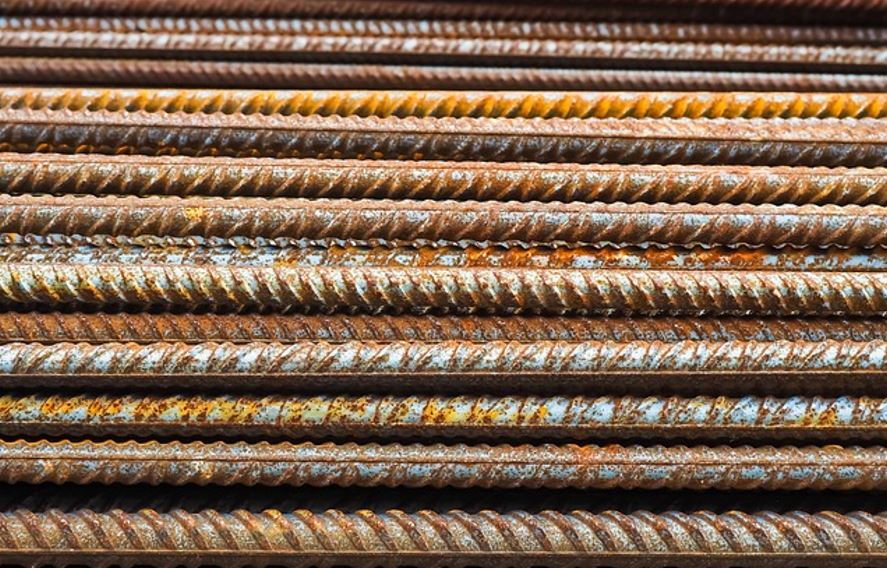
Corrosion protection specialists know how to work with different film-forming protective coatings. These provide anti-carbonation or chemical resistance. We are well versed in the application of all types of protective coatings, including rigid, plasto-elastic or elastic systems.
When selecting a Protective Coatings for Concrete (sika.com), we consider a host of factors. They include:
- water tightness to liquid water
- chloride migration prevention or reduction
- permeability to water vapour
- protection against CO2 diffusion
- static or dynamic crack bridging requirements
- minimum temperature
At the same time, coatings must demonstrate good weathering and ageing; sound hiding power; and low dirt pick up. The choice will be determined together with the clients’ engineering teams who undertake the repair design.
Experienced corrosion protection specialists
Experienced corrosion protection specialists also deploy more sophisticated techniques to safeguard structures against corrosion. A case in point is electro-chemically reversing the naturally occurring corrosion current in concrete.
This is achieved by applying a sacrificial metal or current to the concrete to ensure that rebar stays passivated inside concrete. Achieving cathodic mode is often the last and most effective way to refurbish critical infrastructure.
Anodes are placed throughout large areas of concrete. A high current density is applied over a short period using a fixed voltage power supply. By moving corrosion to the anodes, the environment at the steel surface is rendered less aggressive.
Following the impressed current phase, the anode is connected to the steel galvanically. This is to maintain a passive condition for the remaining life of the structure. No power supply or control equipment is required during this phase.
The anodes are manufactured from a sacrificial metal that will corrode in preference to the reinforcing steel. Their lifecycle depends upon air temperature, moisture and chloride content of the concrete. Therefore, their useable life varies from one structure to the next. Typical installations; however, can be expected to perform between 20 and 50 years.
Deal with corrosion protection specialists
It is important to always deal with corrosion protection specialists and not general contractors. This is considering that corrosion protection is a very specialised field.
There are many reasons for increasing incidence of corrosion damage to reinforced concrete structures. Among others, they include the use of deicing salts and calcium chloride set accelerators and increased construction in aggressive environments. Certainly, accelerated and poor construction practices, as well as finer grinding and lower cement contents of modern cements are also factors.
Reinforcement corrosion is particularly pernicious in that damage may occur rapidly. By the time visible corrosion damage is noticed, structural integrity may already be compromised.
While corrosion damage is to some degree unique to each structure, a few basic tenets hold for most cases:
- Performance of the concrete structure prior to the treatment has a bearing on its performance after intervention. Highly damaged structures that are deteriorating at a rapid rate will require more substantial repair than those less seriously affected.
- The timing of treatment is crucial. This is considering that corrosion rates and damage increase with time. A structure that has reached an advanced level of damage will not respond to “quick fix” solutions. Conversely, a structure that is repaired early enough may be restored to full serviceability relatively cost-effectively.
Learn more about Hindle Mason Projects. www.hindlemason.co.za
Schmidt is a Director of Hindle Mason Projects