
By Ben du Preez
Corrosion protection coating specialists safeguard your structural assets against wear and tear.
Because unprotected concrete is porous, it absorbs liquids that either directly damage the material or contain deleterious agents. These include chloride ions [https://www.sciencedirect.com/topics/pharmacology-toxicology-and-pharmaceutical-science/chloride-ion]. When these reach the steel surface, they combine with hydrogen ions [https://www.sciencedirect.com/topics/earth-and-planetary-sciences/hydrogen-ion] in concrete pores to create acids. In sufficient concentrations, these neutralise the alkalinity of concrete and breakdown the passive layer, facilitating localised corrosion. It proceeds in a very specific forms such as “pitting”. These holes in the steel surface that are deeper than they are round are possibly the most insidious corrosion types. This is considering that relatively little weight loss can cause a significant reduction in section size. Moreover, the localised attack can be difficult to detect prior to severe deterioration having occurred.
Corrosion protection coating and CO2
A corrosion protection coating must also safeguard against carbon dioxide (CO2). CO2 enters concrete via its vast network of interconnected pore channels initiating the corrosion process at the rebar. It reacts with free lime present as calcium hydroxide in the pore liquid. This produces insoluble calcium carbonate and reduces the protective alkalinity of concrete. Known simply as “carbonation”, this natural process progresses inwards from the surface over time. When carbonation reaches the reinforcement, it is no longer in a passive environment. This is due to a loss of alkalinity and, if oxygen, is present, the rebar will start to corrode. Thus, a suitable protective coating for concrete prevents or significantly reduces CO2 diffusion into concrete. EN 1504-2 [https://standards.iteh.ai/catalog/standards/cen/ac5d306d-e443-4023-9888-5ff3dbdf5dfc/en-1504-2-2004?srsltid=AfmBOoqvzXPkRG4u9JJFklb3yApf5vUGGGz9e0GB3JocxusqkF2xBV_R] places a minimum threshold for this as being equivalent to a 50m air barrier. This is sufficient to completely stop the progression of carbonation, according to Dr Robert Engelfried. He is one of the founders of this test method.
Pyrites and related sulphides continue to cause concrete failures. In these cases, they were incorporated into concrete mixes. There are also examples of vast deterioration due to surrounding native soils that contain ion sulphides. Even fill used for structural foundations can contain ion sulphides. Regulations as to the amount of acceptable ion sulphides in construction material vary by country. There is no universal standard.
An industry that struggles with sulphide-induced corrosion is agriculture considering its use of manure. Manure contains high concentrations of ion sulphides. In instances where it has been stored in barns below slatted floors, severe concrete corrosion has occurred.
All corrosion protection coating types
Hindle Mason Projects has extensive skills and experience working with all corrosion protection coating types.
Among others, these include epoxy-based coatings. These seal concrete to prevent liquids and other destructive contaminants from entering it. They also do not break the bond between the concrete and reinforcing bar embedded within it. Some of these systems are rigid and others plastic-elastic or elastic in nature. They have been designed as such to enable some flexibility at joints, or other areas where concrete moves.
In some instances, we prefer to use a cement-based concrete protective coatings [Sikagard®-720 EpoCem® | Epoxy Repair Mortar]. This is in applications where we need to maintain a “mineral appearance” while protecting structures against aggressive environments.
Meanwhile, reactive coatings are deployed when additional chemical protection is required. Tunnels and marine structures are some examples of structures that require extraordinary protection against aggressive or special exposure situations. In these applications, we also have to take into consideration epoxy-based coatings’ lower resistance to UV light exposure. Therefore, an additional topcoat of a lightfast UV-resistant polyurethane coating may be necessary. An example of a reactive coating is https://grc.sika.com/dam/dms/gr01/f/Sikagard%20WallCoat%20T%20EN.pdf.
High-performance corrosion protective coating
Considering the nature of our work, we regularly deploy a high-performance concrete corrosion protection coating. A case in point is Sikagard®-62 | Chemical Resistant Epoxy Coating.
We have successfully lined many storage tanks and silos operating in extremely harsh conditions with this system. It has also been used as a suitable anti-corrosion coating on steel structures in various industries. These include food and beverage, wastewater treatment, agriculture and chemical and pharmaceutical.
First and foremost, this high-build system provides excellent mechanical and chemical resistance and is impervious to liquids. It is also easy to mix and apply by our teams which have been trained in its correct application. This, in turn, ensures high productivity levels and, therefore, quick maintenance and repair turnaround times. Furthermore, it is solvent free which complements our robust health, safety and environment protocol.
These industrial-spec corrosion-protection coatings have been designed to perform in different harsh environments and withstand various chemicals or substances.
For example, resources and heavy industry often use concrete structures for manufacturing and storage purposes. These structures have to endure extreme temperatures and highly abrasive materials.
The premature deterioration of concrete assets remains a significant concern in the mining industry. It is currently the costliest factor in terms of concrete asset management. Worryingly, some concrete structures in the mining industry are showing signs of serious degradation only half-way through their design lifecycles. Generally, they have been designed to last between 50 and 100 years, if maintained and repaired correctly.
Therefore, other innovative ways of safeguarding them against corrosion also need to be considered.
Innovative rebar corrosion protection coating
Such a solution entails deploying an innovative rebar corrosion protection coating. A case in point is Rebar Coatings as part of our range of corrosion protection solutions.
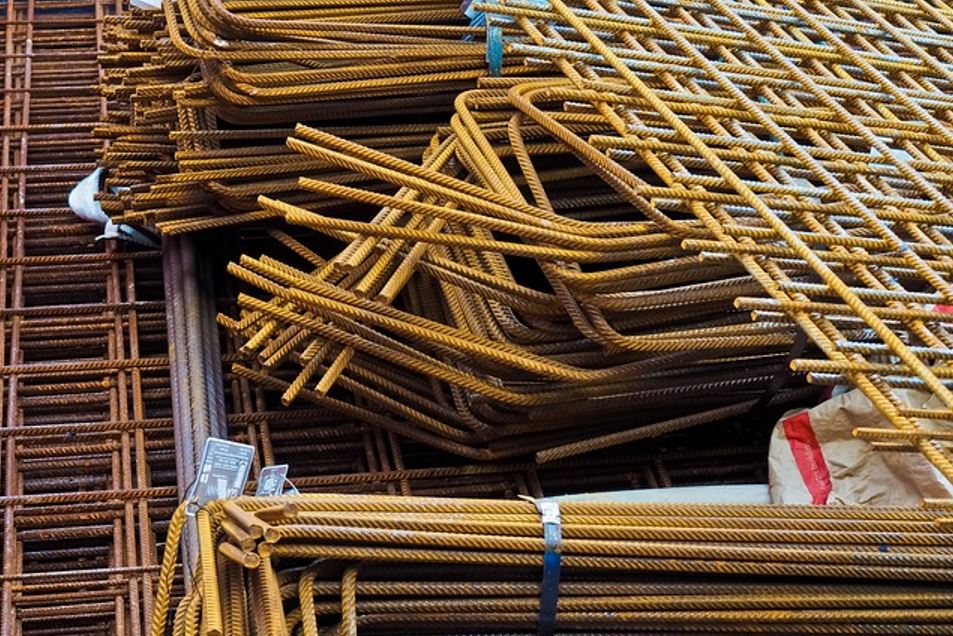
By coating rebars with epoxy, we create a barrier that safeguards against corrosion. Rebars that have been treated in this way have a chloride threshold value that is above or equal to that needed to initiate corrosion. Corrosion resistance of rebars with damage levels of 0.004% to 0,50% can be significantly increased using this method. This can between 69 and 1 762 times, according to previous research into the technology.
Epoxy commonly adheres to rebar via electrostatic coating. Mechanically blasted steel rebar is first heated to a temperature of between 180oC and 250oC. Thereafter, charged epoxy powder particles are electrostatically sprayed onto the rebar. It then melts, flows and cures on the rebar surface after which it is quenched in water at ambient temperature. In this way, a continuous protective coating is created.
However, the success of this application depends on the expertise of a skilled and experienced concrete corrosion specialist. There have been instances where rebar has failed due to the incorrect application of the treatment. These coatings can become damaged during bending, handling, transportation, application and concrete placement.
Unique concrete corrosion protection coating
Another unique concrete corrosion protection coating type that Hindle Mason Projects deploys is concrete water repellents. A case in point is Silane Siloxane Coatings | Water Repellents, also referred to as a hydrophobic impregnation.
This invisible, non-film forming protection system penetrates the surface pores and capillaries of concrete, lining but not filling them. In this way, they are made less permeable to water, as well as aggressive soluble salts, including chlorides and sulphates. This is achieved without changing the surface appearance of concrete.
Learn more about Hindle Mason Projects www.hindlemason.co.za
Ben du Preez is Contracts Director of Hindle Mason Projects