
By Marchant Sevenster
Concrete repair specialists have the necessary expertise to evaluate concrete structures for structural integrity and durability performance. Correct identification of the leading cause of the damage underpins a successful repair.
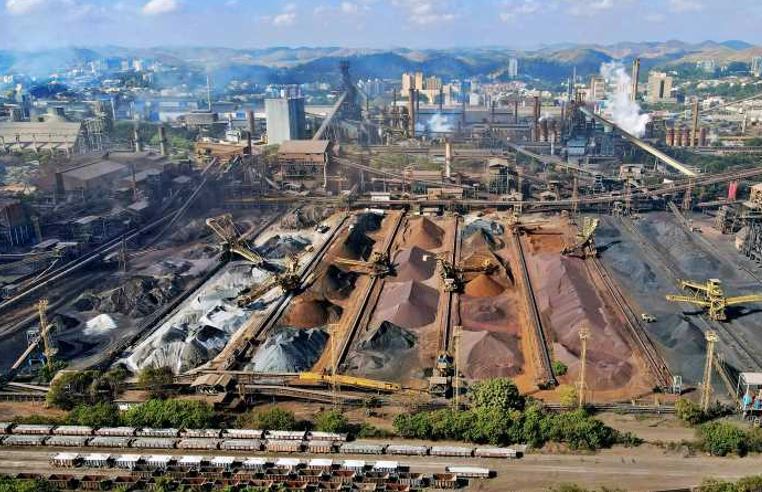
In the mining industry, concrete structures play a pivotal role. Among others, they include storage silos; settling basins; process tanks; chimney stacks; and foundations of plant and equipment.
However, all too often they are overlooked by asset owners and maintenance managers. Preference is usually given to equipment in proactive maintenance plans.
Therefore, many concrete assets in the industry are in poor state. Ageing infrastructure is rapidly nearing the end of its design life. As such, upkeep requires regular extensive and costly maintenance. This is compounded by unplanned asset downtime as a result of limited asset integrity understanding.
Bear in mind the harsh conditions in which many of these structures usually operate which significantly accelerates deterioration.
From the first day that they start operating, concrete assets deteriorate. In many instances, the rate at which they decline is significantly faster than other infrastructure.
Concrete assets carry large and heavy material loads. Furthermore, they are exposed to dynamic loads generated by processes such as crushing, scrubbing, screening and milling. This is in addition to the role that they play in supporting heavy equipment and machinery and the impact loads that they endure over their lifecycle. In underground mining, concrete structures are subjected to significantly harsher environmental and loading conditions. This includes large temperature fluctuations. In general, the difference between the highest and lowest temperatures on mining sites can be as high as 40°C.
Skills of concrete repair specialists
Enterprising mines harness the skills and experience of concrete repair specialists to routinely inspect these structures. This is to manage the potential risk of structural failures. The first concern is that they can result in injuries and fatalities. Mines are obligated to ensure that they provide health and safe working environments. Refer to https://www.gov.za/sites/default/files/gcis_document/201409/act85of1993.pdf and https://www.gov.za/documents/mine-health-and-safety-act.
Then there is the downtime that mining companies can incur due to structural failures that need to be considered. According to some experts, downtime can cost about US$180 000 per incident. If left unaddressed or the issue persists regularly, the annual cost of downtime can reach a staggering US$10billion.
This is over-and-above the profit losses that mines incur during downtime. Mining companies can sustain losses of US$130 000 per hour for every equipment failure incident. They can experience up to 60 hours of total downtime. This is considering the actual shutdown period of equipment and the time taken to complete repairs.
Concrete repair specialists evaluate rebar
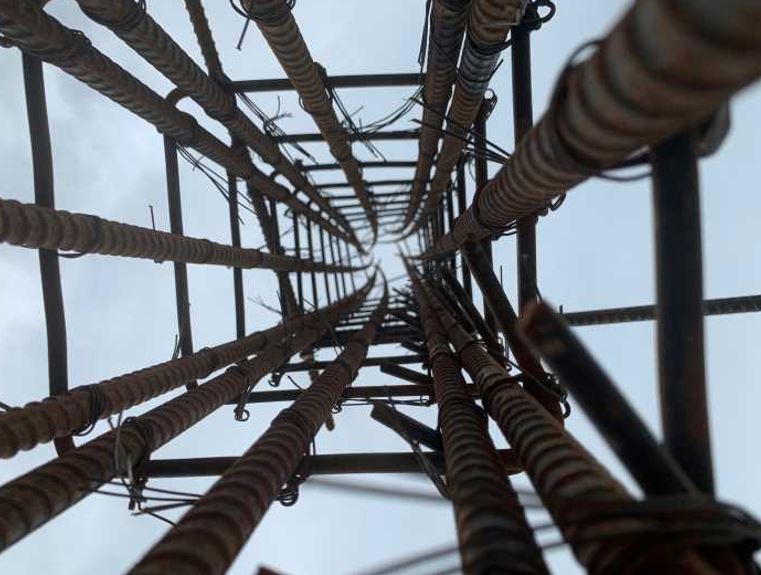
When inspecting assets, concrete repair specialists will pay particular attention to the condition of rebar. This includes its spacing, size, depth and continuity, such as lap splices and embedment depth.
Bear in mind the significance of rebar in reinforcing bar. As primary reinforcement, rebar helps to carry the structural and environmental loads placed on a structure to avoid collapse. It also fulfils a secondary role, referred to as distribution or thermal reinforcement. This is the function that rebar plays in maximising durability and resisting cracking, shrinking and other stress factors. Furthermore, rebar provides resistance to concentrated loads in certain areas. This is by transferring loads across wider areas. Furthermore, it ensures that other rebars stay in the correct position to handle assigned loads.
Ground-penetrating radar [https://www.sciencedirect.com/topics/materials-science/ground-penetrating-radar] is used to map steel rebar in concrete structures for location and continuity.
Meanwhile eddy current [https://www.saiw.co.za/saiw/ndt-courses/eddy-current-testing/] is used to assess cover thickness and rebar size.
Concrete repair specialists will also pay particular attention to the thickness of concrete. Assessing the thickness of concrete from one side can be especially challenging. Some examples of where this may have to be done include retaining walls and slabs. In these instances, concrete repair specialists use impact echo technologies [https://tsapps.nist.gov/publication/get_pdf.cfm?pub_id=860355].
Meanwhile, ultrasonic pulse echo tomography [https://www.sciencedirect.com/topics/engineering/pulse-echo-ultrasonic-inspection] is used to assess various anomalies. These include honeycombing; poor-quality concrete; and concrete element thickness.
Concrete repair specialists’ inspections
Concrete repair specialists’ inspections will also focus on uniformity, quality and integrity of structures and foundations.
Evaluating the uniformity and quality of elements are especially important when repurposing existing structures. In these instances, concrete repair specialists will also determine the extent and severity of defects in existing structures and foundations. These include cracks and delamination.
For these applications, ultrasonic pulse velocity technology is used. The test is usually performed in various configurations to collect information on the integrity and crack depth of concrete elements.
For any rehabilitation design, concrete compressive strength is the most important consideration. Concrete repair specialists again deploy non-destructive testing in these applications. This approach reduces the number of core samples that are needed to determine the compressive strength of concrete. Bear in mind the many challenges associated with core drilling. This includes the risk of potentially further damaging a structure in poor condition. Moreover, cores need to be handled very carefully to avoid damaging them and core holes must be repaired. To drill core holes, concrete repair specialists also require a hot permit [https://www.santam.co.za/blog/intermediary-advice/hot-work-permit-system-a-crucial-part-of-commercial-fire-safety-management/].
As a substitute, concrete repair specialists undertake rebound hammer tests [https://testbook.com/civil-engineering/concrete-rebound-hammer-test#:~:text=What%20is%20Rebound%20Hammer%20Test%3F&text=The%20Rebound%20Hammer%20test%20is%20a%20non%2Ddestructive%20method%20for,plunger%20within%20a%20tubular%20housing] to examine concrete strength. Notably, these tests are both cost- and time efficient. The results can be combined with those acquired from ultrasonic-pulse velocity to improve strength prediction accuracies.
Concrete repair specialists assess durability
Concrete repair specialists will also assess durability of concrete structures. This is considering the harsh operating conditions to which most mine infrastructure operates.
Again, this is a very important consideration when repurposing existing concrete structures. Evaluating the quality, integrity and uniformity of existing structures is also an imperative when determining the most appropriate repair method. Concrete repair specialists will pay particular attention to the durability and structural characteristics of foundations. They will also assess concrete defects, including cracks and delamination, in structures and foundations.
One of the most crucial factors affecting the durability and stability of concrete is rebar corrosion. It generates corrosion byproducts which lead to volume expansion that exerts tensile forces. This results in the formation of cracks and concrete spalling. As such, the evaluation and prevention of rebar corrosion is crucial and best left to concrete repair specialists.
To assess the likelihood of rebar corrosion, use is made of the half-cell corrosion potential test [https://www.giatecscientific.com/education/what-is-the-half-cell-potential-test/#:~:text=The%20half%2Dcell%20potential%20test%20is%20the%20only%20corrosion%20monitoring,rebar%20in%20reinforced%20concrete%20structures]. It is a very effective method of assessing the condition of existing assets. This while also helping to plan for effective repair and evaluating the quality of previous rehabilitation efforts.
Meanwhile the surface electrical resistivity test [https://www.sciencedirect.com/topics/chemistry/surface-resistance] assists in evaluating resistance against chloride ions ingress [https://www.sciencedirect.com/science/article/pii/S2214509524002262].
Hindle Mason Projects is a skilled and experienced concrete repair and corrosion/erosion protection specialist with a track-record servicing mines.
Sevenster is Business Development Manager of Hindle Mason Projects