
By Ben du Preez
Concrete repair contractors have the skills and experience needed to maintain your structural assets correctly.
Proactive maintenance is more than just restoring the aesthetics of your structures or repairing damage. Rather, proper proactive maintenance prolongs the useable lifecycle of these assets. This is important considering the high cost involved in repairing and replacing severely damaged concrete structures. In the US, the annual cost of repair and replacement of bridges is close to US$8,3billion. This is anticipated to increase to about US$9,4billion over the next 20 years. In Western Europe, annual costs of concrete repairs amounted to US$5billion in 1998. Refer to 05.pdf (scielo.org.za).
However, repairs are underpinned by an understanding of the condition the structures and the underlying causes of deterioration. Working closely with our clients’ engineers, Hindle Mason Projects has extensive experience undertaking site inspections. These determine the state of the concrete structures and identify the underlying causes of the damage. Bypassing this important step, may result in a cycle of ongoing repairs. This study highlights the importance of root-cause analysis. Note the emphasis on also approaching this analysis from an organisational perspective. This is opposed to only from an operational level, considering the impact that dysfunctional assets have on business performance. Maintenance is no longer just an inevitable component of production. Enterprising companies now view maintenance managers as an internal and external partner of success. Maintenance managers are no longer underdogs. The strategic role that they play is now acknowledged in the boardroom!
Concrete repair specialists know concrete
Concrete repair specialists know that defects in concrete stem from obscure reasons. Identifying the root cause and addressing them timeously is, therefore, their first priority.
For example, it is well known that corrosion of reinforcing bar is the lead cause of reinforced concrete failure. Corrosion of steel reinforcing generates iron oxides and hydroxides. This can result in an increase in volume of between five and eight times the original size of concrete. These forces accumulate within the concrete around the reinforcement that result in spalling. Cracks then provide an easy way for oxygen, moisture, chlorides and other corrosive agents to enter concrete. This facilitates the electrochemical corrosion process.
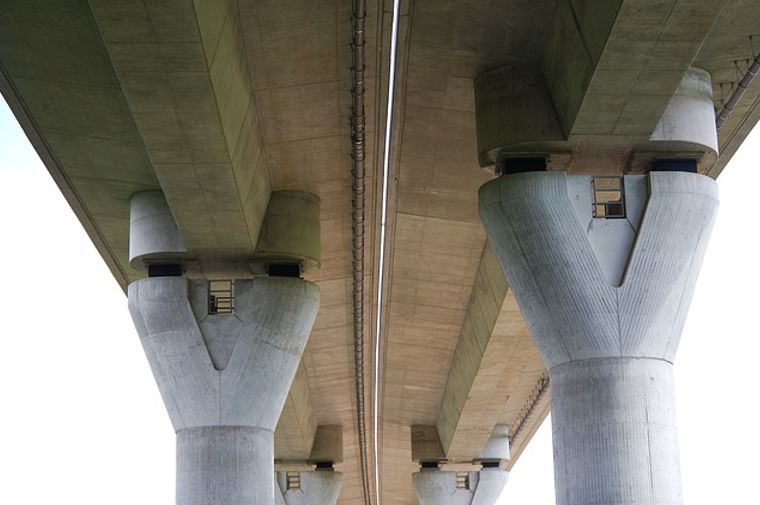
Bridge girders often crack upon pre-stress release. These cracks propagate into the bottom flange of the girder where the pre-stress strands are positioned. These widen due to traffic loads. Severe corrosion currents could easily be triggered when leakages from the bridge expansion joint penetrate the bottom. Therefore, leakage of the expansion joints must be arrested prior to crack and concrete repair activity. This is because it is the root cause of the problem.
Concrete repair specialists arrest degradation
Concrete repair specialists have the skills, experience and technology to correctly diagnose the root cause of degradation. They do not assume but rather base their repairs on evidence.
For instance, cracking at an early age on new concrete bridge decks is also a common occurrence. This is also known as transverse cracking. The defects appear along the length of a span over transverse reinforcement and accelerate corrosion rates. There are many underlying causes that need to be diagnosed to correctly repair the problem. It is incorrect to merely assume that the main cause of failure is the presence of chlorides. There are many factors that could lead to corrosion and the ultimate failure of the bridge. These may include cracks in the bridge girder web and flange; a substandard drainage system; and a failed waterproofing membrane. There are other possible causes that need to be thoroughly investigated. What about inappropriate bridge joints and voids in prestressed and post-tensioned cable ducts due to excessive grout bleed? Then there are a host of micro-level factors that also need to be investigated as potential root cause problems. These include design, material, environment and construction practices.
The importance of maintaining these assets is critical when considering the cost involved in building them. In 2011, the average bridge construction cost was about R15 000 per square metre in South Africa. This has now risen to around R20 000. Therefore, the replacement value of a typical 100m-long, 14m-wide bridge is about R28million. This is according to Sanral: Building South Africa through better roads: SanralPages.
Concrete repair specialists’ expert opinions
Concrete repair specialists provide expert opinions on how to correctly solve the problem. Certainly, this knowledge is not only being harnessed by government bodies to prolong the lifecycle of their infrastructure assets. Commercial property developers also engage experts such as Hindle Mason Projects to maintain and repair their structures. These also represent large investments that need to be safeguarded. The cost of building in South Africa generally ranges from R10 000 to R20 000 per square meter. Bear in mind that this is a rough estimate, and actual costs may vary.
Again, it is important to identify the root cause of deterioration of buildings to maintain them correctly. For example, it is quite common to observe efflorescence inside buildings on the ground floor. This is due to rising or penetrating dampness. One of the causes of this is absence or damage of proper damp proof. This enables ground water or moisture from landscape planters outside to seep through the external walls. Treating the damp patch inside without repairing the damp proof is, therefore, only a temporary fix. The problem will persist despite the time and costs expended on solving it.
Similarly, repairing a spalled balcony with a quick-fix patch method will not achieve the desired result. This is even if the best repair mortar is used. The root cause of the damage could be a failed waterproofing membrane or an air-conditioning drainpipe leak. A further potential root cause could be faulty concealed pipe joints, or a combination of factors.
Only engage concrete repair specialists
Therefore, enterprising property developers prefer to only engage concrete repair specialists. Unfortunately, many have had to learn the hard way.
Another example of a typical problem encountered in buildings is roof leakages. This leads to disputes between landlords and tenants regarding the repair liability. The failure of roof waterproofing is often just assumed to be as a result of poor workmanship. Based on this assumption, refurbishments are undertaken to the roof structure just for it to start leaking again. This is because the root cause of the leaks has not been resolved. An interesting study was undertaken into roof construction defects. It notes that the root cause of failure of roof waterproofing membranes is roof-parapet wall cracks. Therefore, the design and choice of material for roof-parapet walls is critical to avoid waterproofing membrane failures on roof slabs. Certainly, there are more factors that need to be investigated to get to the bottom of the problem. It could even be as a result of incorrect termination details of waterproofing membranes at up-stands and drains. Improper selection of waterproofing systems and poor roof-joint detailing must also be considered.
Another common issue is tiles that fall from building facades. This can also be as a result of many factors, such as thermal and moisture effect that cause tile movement. Inferior quality adhesives; poor workmanship; incorrect joints; weathering; vibration; and substrate properties also need to be considered. Again, the problem could be as a result of one of these or combination thereof.
Companies entrust concrete-repair specialists to drill-down through the symptoms to get to the root cause of the problem. This will ensure a durable repair and refurbishment, as opposed to a short-term solution. A quick-fix approach will, inevitably, result in additional costs. This is considering the need to re-examine and reassess the problem and reselect and reapply repair systems.
Du Preez is a Contracts Director of Hindle Mason Projects